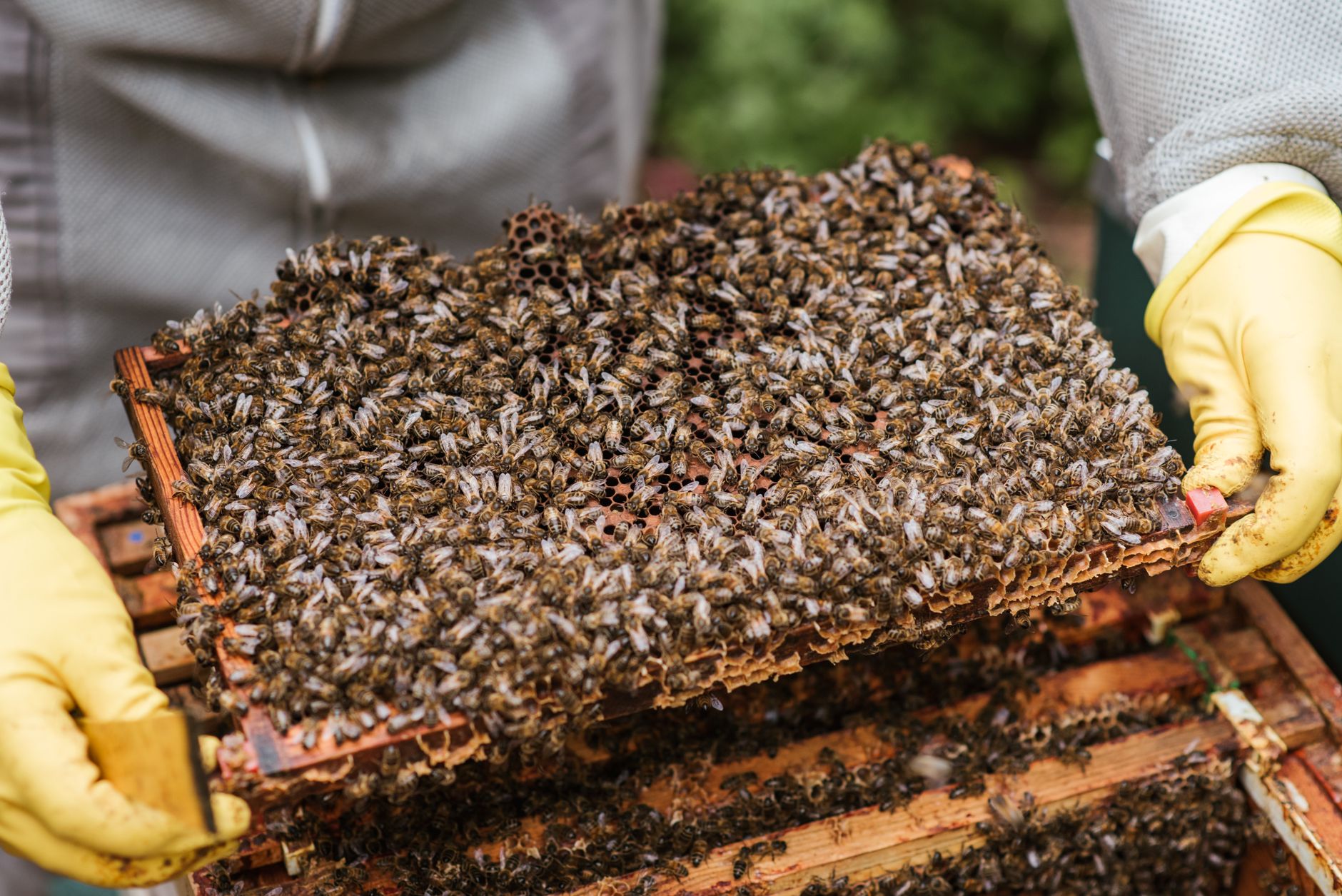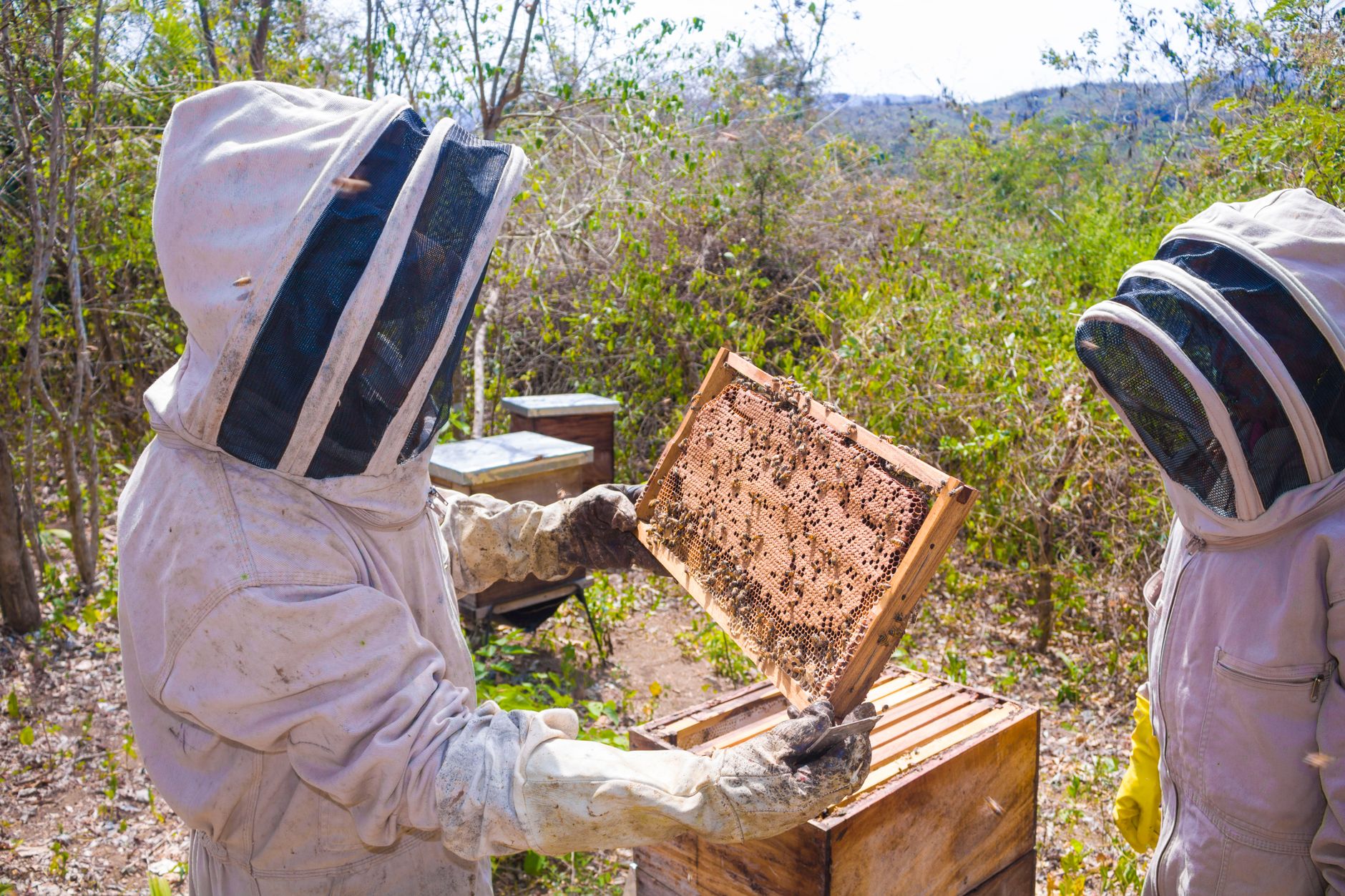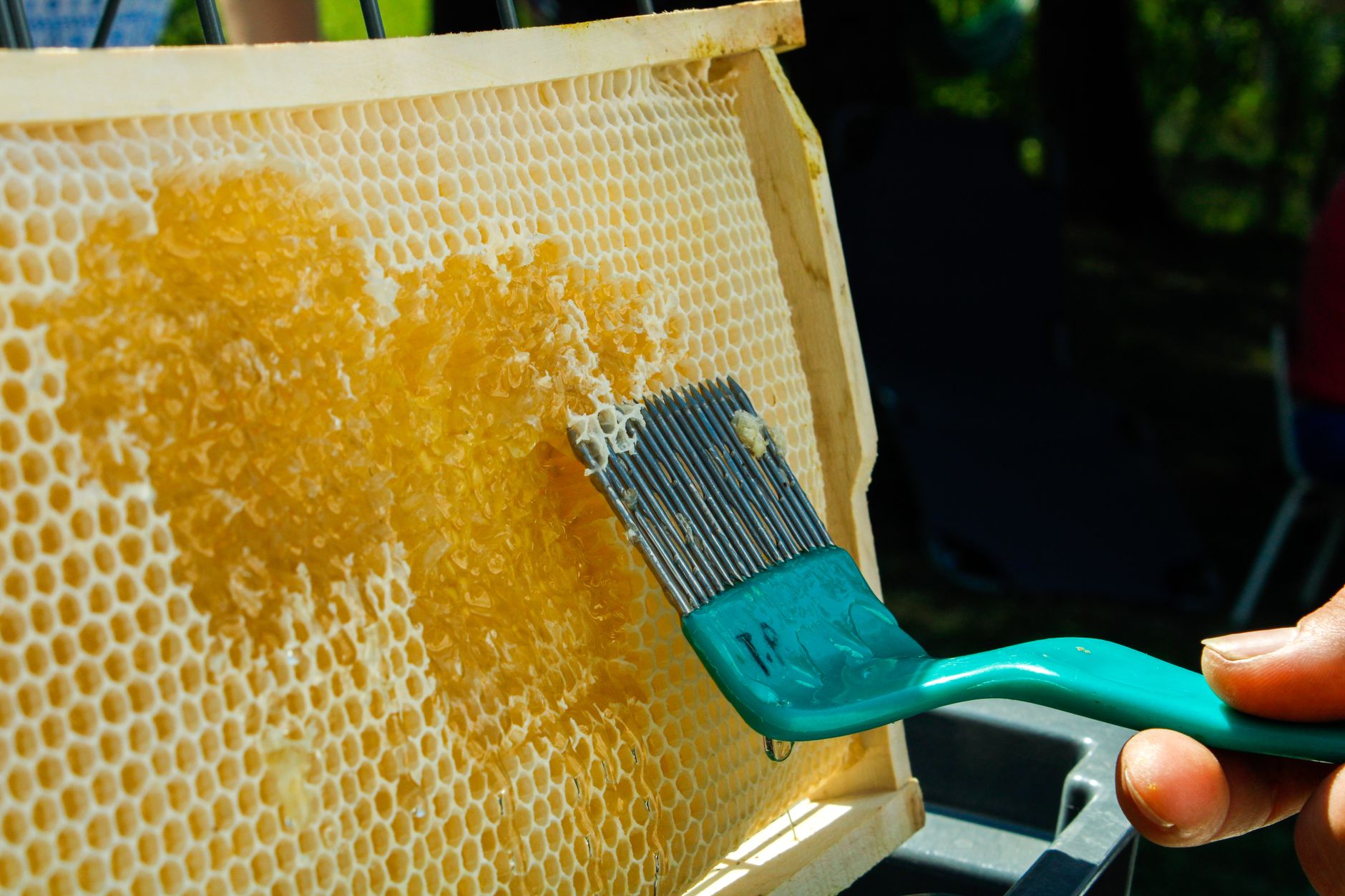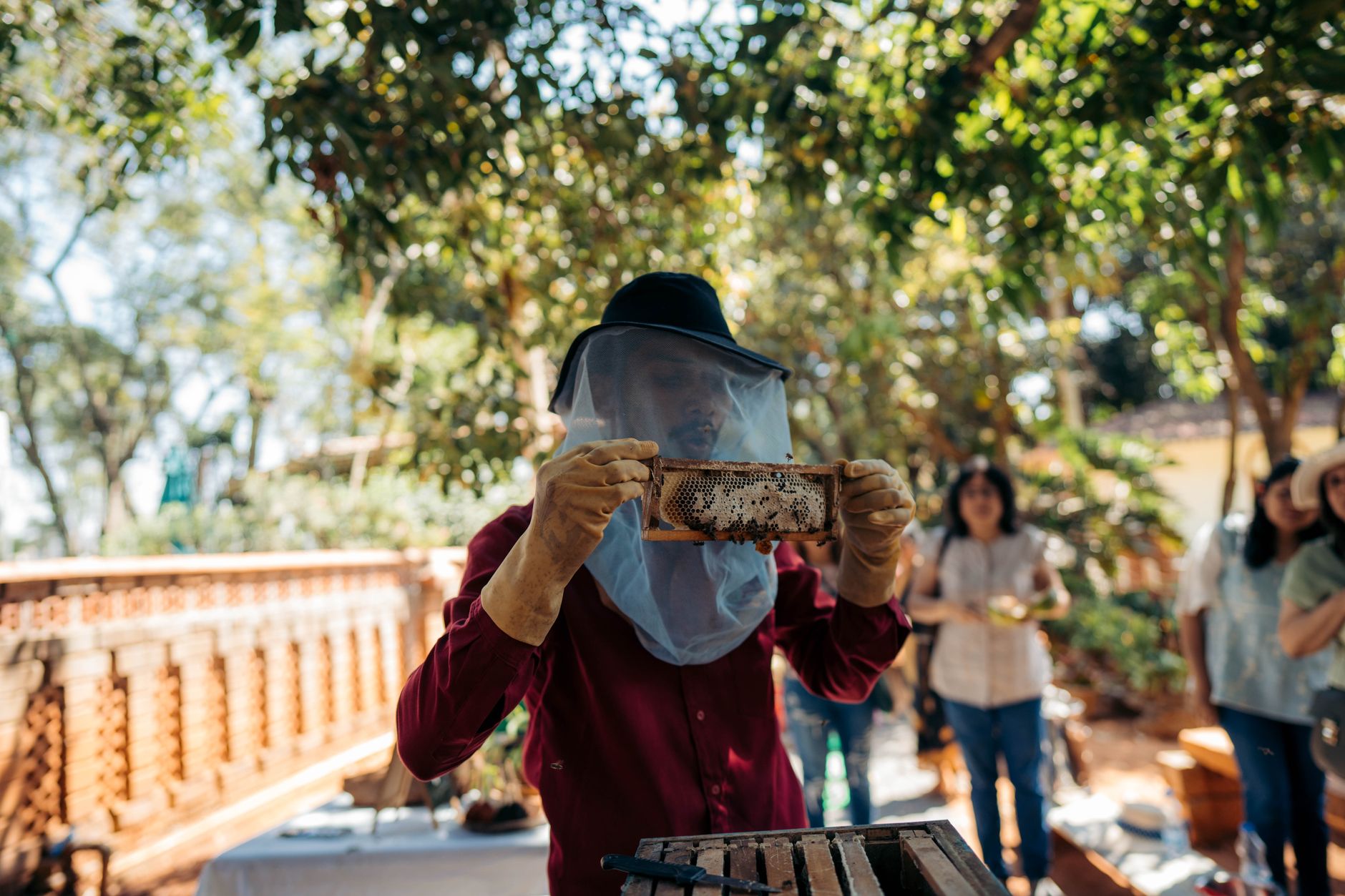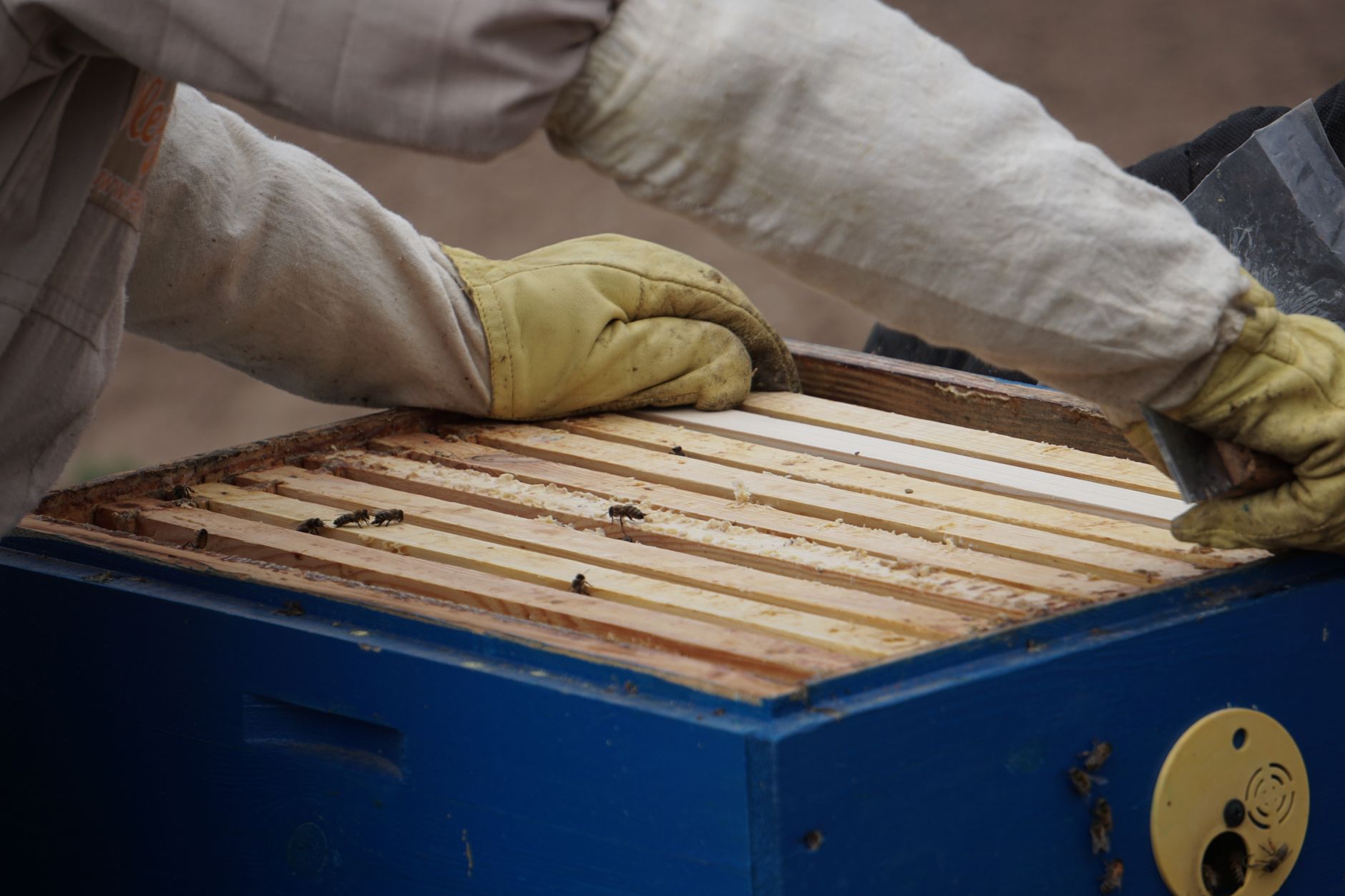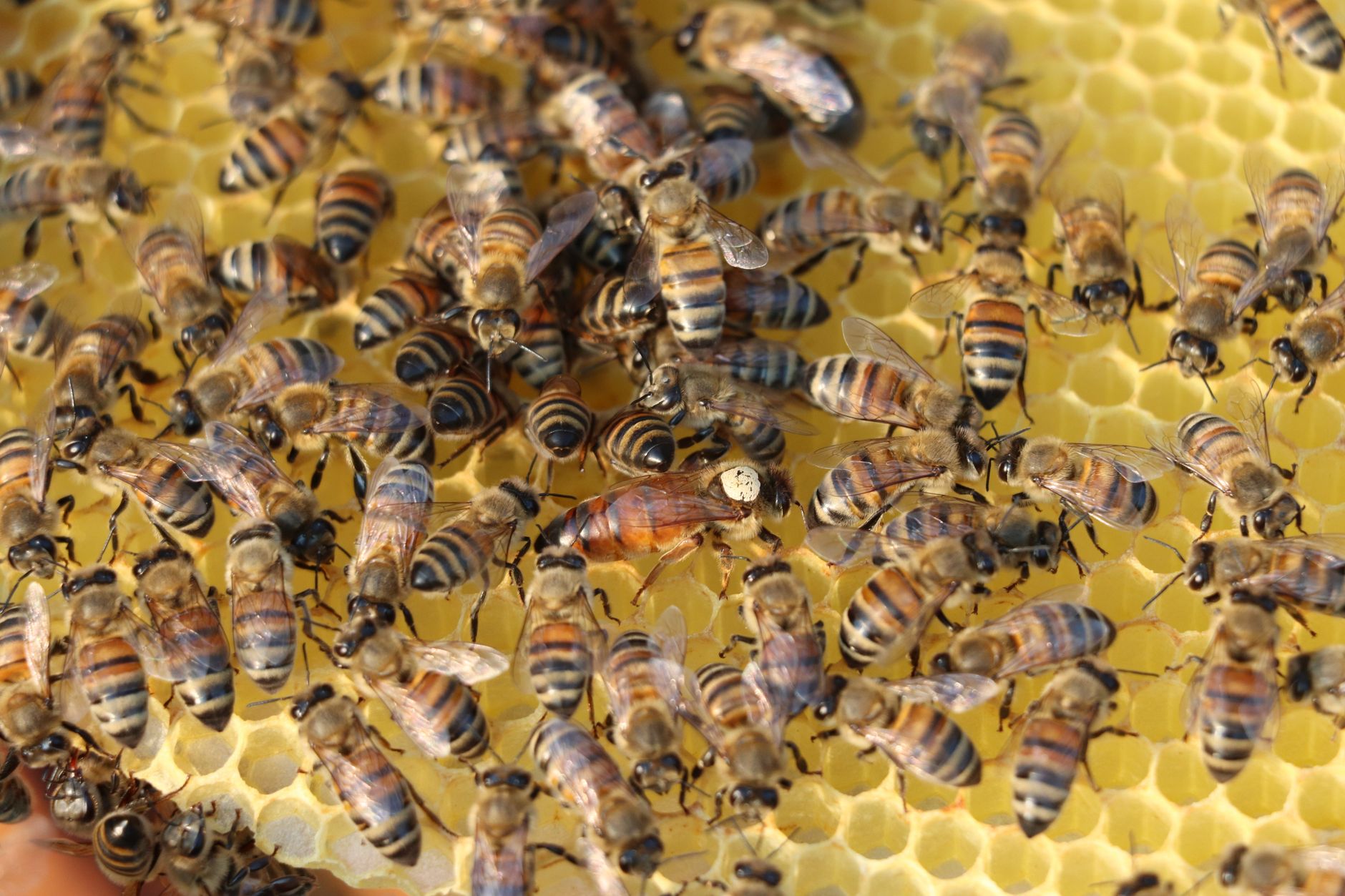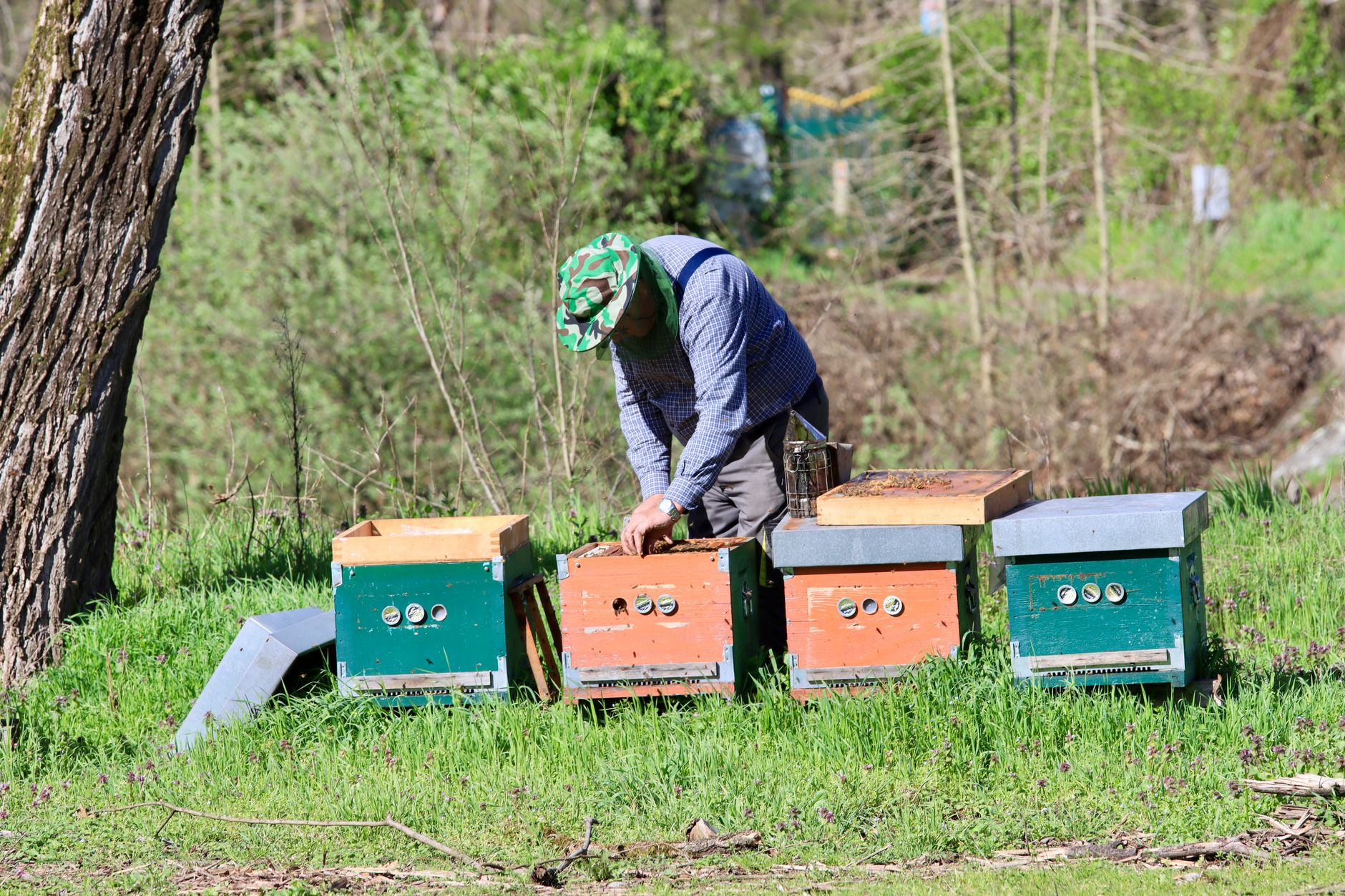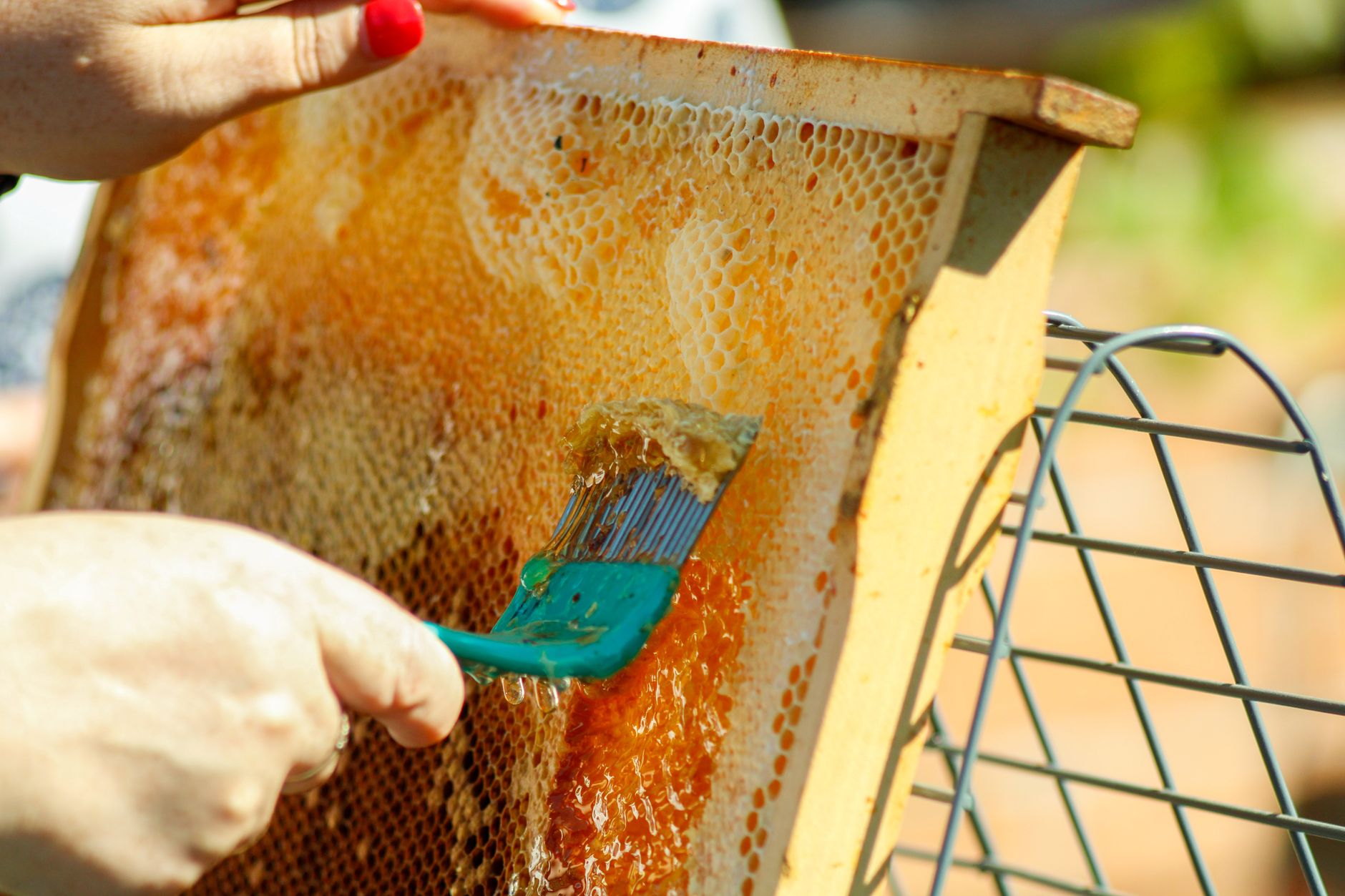
Close-up of hands cutting honeycomb from a frame. Rustic scene of fresh honey production.

10 Beginner Beekeeping Mistakes (And How to Avoid Every One)

Quick Answer: The most consequential beginner mistakes are ignoring varroa mites (single biggest cause of first-year colony loss), not keeping hive records (impossible to track problems), and harvesting first-year honey (leaves colony without winter stores). Most beginner colony losses are preventable with basic monitoring and a mentor. Every experienced beekeeper has made these mistakes. Some lost colonies because of them. Rather than learn everything the hard way, here are the 10 most common errors new beekeepers make — with exactly what to do instead. Read these before your first season and revisit them mid-season. Many of these mistakes feel intuitive at the time but have consequences that don’t show up until weeks or months later. ...

April 25, 2026 · 8 min · Jarrod Gravison
A small glass jar filled with golden honey on a wooden table, offering a sweet treat concept.

Bee Swarm Guide: What to Do When Your Bees Swarm (and How to Prevent It)

Quick Answer: A swarm happens when half your colony leaves with the old queen to find a new home — it’s natural, mostly harmless, and happens to almost every beekeeper eventually. If your bees swarm: don’t panic, they’re docile. If they’ve clustered nearby, you can catch them in a cardboard box or swarm trap and rehive them in 1–2 hours. To prevent swarming: add space early, split colonies in spring, and inspect every 7–10 days during peak season (April–June). ...

April 25, 2026 · 13 min · Jarrod Gravison
Anonymous farmer in protective helmet and gloves holding honeycomb with bees and honey while working in garden

Beekeeping Tools and Accessories 2026: The Complete Equipment Guide

⚡ Quick Answer: Every beekeeper needs 6 core tools: a J-hook hive tool ($8–15), a standard hive tool ($8–12), a quality smoker ($35–65), a frame grip ($12–20), a bee brush ($8–15), and a queen clip/cage ($5–10). Everything else — feeders, uncapping forks, extractors — add as your apiary grows. The J-hook hive tool is the one you’ll reach for every single inspection; buy a good one from the start. ...

April 25, 2026 · 16 min · Jarrod Gravison
A beekeeper in protective suit examining a hive outdoors during spring.

Best Beehive Starter Kits 2026: Complete Beginner's Guide

Quick Answer: The best beginner beehive kit is the Mann Lake HD-110 ($250–300) — pre-assembled, quality pine, complete with smoker, veil, and hive tool. Budget option: Hoover Hives ($150–180). Premium: Flow Hive 2+ ($700–900). All beginner kits should use the Langstroth hive system — it’s the industry standard with the most community support. Budget $340–740 total for year one including bees and supplies. Starting your first hive is one of the most rewarding decisions a backyard hobbyist can make. But the equipment decisions you make upfront determine whether year one is exciting or frustrating. We reviewed the most popular starter kits — here’s what’s actually worth buying. ...

April 25, 2026 · 6 min · Jarrod Gravison
Close-up of hands cutting honeycomb from a frame. Rustic scene of fresh honey production.

Best Beekeeping Gloves 2026: Leather vs Nitrile vs Ventilated

Beekeeping gloves exist on a spectrum: maximum protection on one end, maximum dexterity on the other. Where you need to be on that spectrum depends on your experience level, your colony’s temperament, the time of season, and your comfort with bee stings. Most beginners start with full leather gloves and work toward thinner gloves as they become more comfortable and their colonies become more familiar. This is the right progression — not weakness. ...

April 25, 2026 · 4 min · Jarrod Gravison
Detailed view of a wooden beehive with a honey-laden frame in a natural setting showcasing the art of beekeeping.

Best Beekeeping Suits 2026: Top Picks for Beginners and Experienced Beekeepers

Quick Answer: The best all-around beginner beekeeping suit is the Humble Bee 410 Polycotton — full body coverage, fencing veil, good sting protection at a fair price ($60–80). For hot climates, upgrade to a ventilated 3-layer suit like the Vivo Bee ($80–120). For premium quality, the Ultra Breeze ($140–200) is the suit serious beekeepers wish they’d bought first. Your beekeeping suit is the most personal piece of equipment you own — you wear it every time you open a hive, and a bad one makes beekeeping miserable. Too hot, too tight, or a veil with poor visibility can turn an enjoyable inspection into an anxious ordeal. This guide covers every category of protective gear with specific recommendations, so you can pick gear that works for your climate, budget, and experience level. ...

April 25, 2026 · 7 min · Jarrod Gravison
Aesthetic portrayal of honey jars with dippers and flowers on a white background.

Best Honey Extractors 2026: Manual and Electric Options for Every Scale

Quick Answer: Best for beginners (1–2 hives): Happybuy 2-Frame Manual ($90). Best mid-range (3–5 hives): VEVOR 4-Frame Electric ($200). Best for serious hobbyists (5–10 hives): Maxant 3100P 9-Frame Electric (~$500). Best professional: Lyson 12-Frame Radial Electric ($800+). For 1–2 hives, consider renting from your local beekeeping club first. Buy once you’re committed to 3+ hives. The moment your first honey super comes off the hive — frames dripping with capped, golden honey — is one of beekeeping’s great rewards. What comes next is extraction: getting that honey out of the comb and into jars. Your extractor choice determines how fast, how easy, and how much of that honey actually ends up where it belongs. ...

April 25, 2026 · 11 min · Jarrod Gravison
Aesthetic portrayal of honey jars with dippers and flowers on a white background.

Buying Bees 2026: Packages vs Nucs vs Splits — Which Is Right for Your First Hive?

⚡ Quick Answer: For most beginners, a nucleus colony (nuc) is the best choice — it’s an established 4–5 frame mini-colony with a laying queen, brood, honey, and workers already functioning as a unit. Packages ($150–175) are cheaper but have higher first-year failure rates because the queen is unfamiliar to the workers. Order from a local breeder when possible — local genetics outperform packages shipped cross-country. You’ve bought your hive equipment, picked a location, and researched your local forage plants. Now comes the question every new beekeeper eventually has to answer: how do you actually get bees? It sounds simple, but the method you choose — package, nucleus colony, or split — has a bigger impact on your first-year success than almost any other decision you’ll make. ...

April 25, 2026 · 14 min · Jarrod Gravison
Top view of honey dipper in a jar, perfect for culinary and food themes.

Common Bee Diseases & Pests Guide: Identification & Treatment 2026

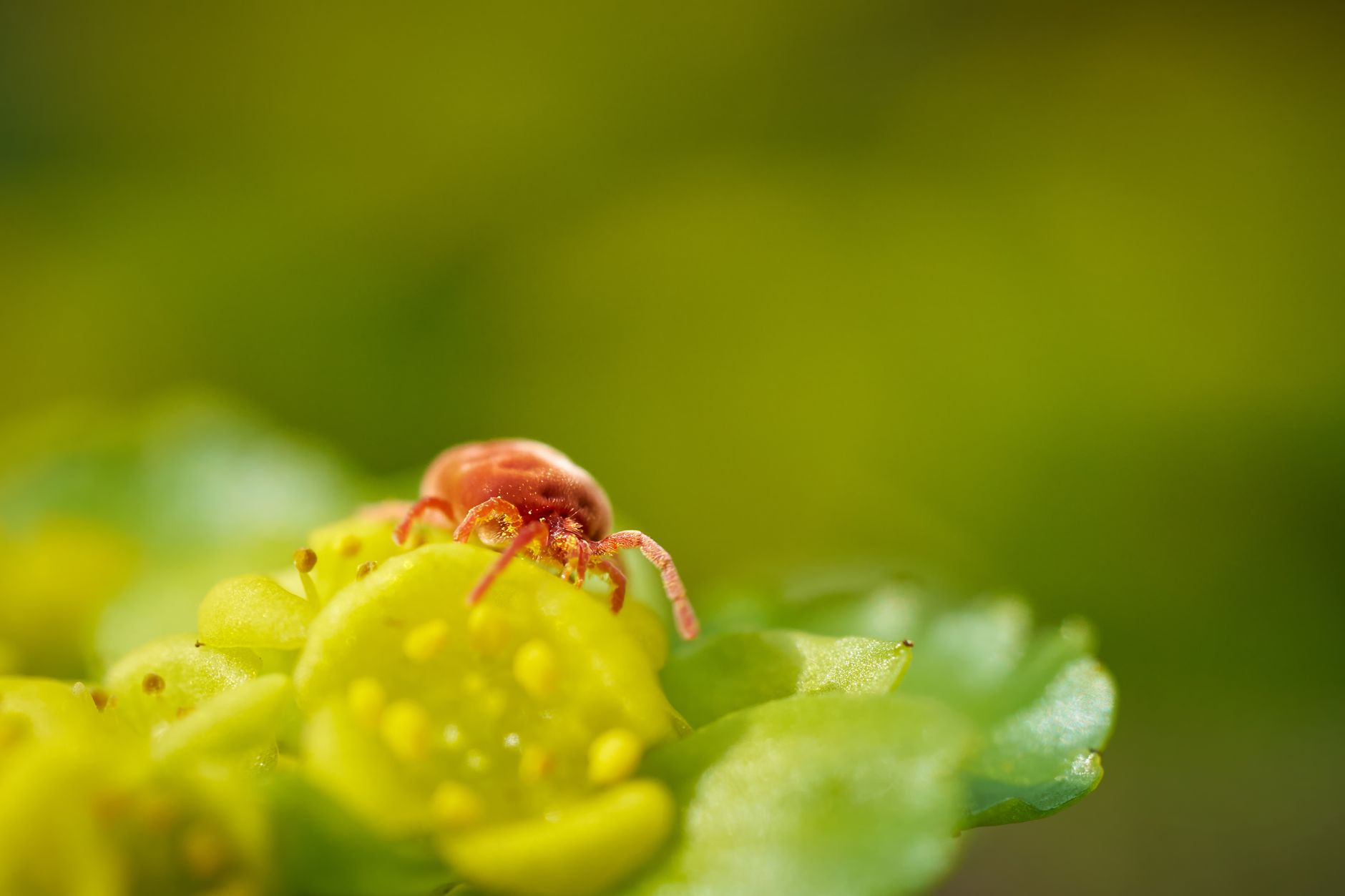
Disease and pest management is the most challenging aspect of modern beekeeping. Bees face pressures they didn’t face 50 years ago: Varroa mites (introduced to North America in 1987) weakened colony immune systems, opened the door to viral infections, and fundamentally changed beekeeping practice. Understanding what you’re looking at during inspections is critical to responding appropriately. Varroa Mites (Varroa destructor) Varroa is the single greatest threat to honey bee colonies worldwide. The external parasitic mite feeds on bee larvae and pupae, transmits viral diseases (DWV, sacbrood), and causes colony collapse if untreated. Most colonies without treatment die within 2–3 years. Varroa is not “just a mite” — it is an existential threat to untreated colonies. ...

April 25, 2026 · 5 min · Jarrod Gravison
Close-up view of fresh honeycomb pieces in a jar, showcasing natural sweetness and texture.

Honey Extraction Equipment Guide: What You Need for 1–10 Hives

Honey extraction equipment is the major capital investment for a small-scale beekeeper. Unlike hive equipment (which you need from day one), extraction equipment can be deferred until you have honey to harvest. In year one, most beekeepers leave all honey for the colony’s winter stores and don’t extract at all — this is often the right choice for colony survival. Crush and Strain: The No-Equipment Option Before investing in extraction equipment, know the free alternative: ...

April 25, 2026 · 4 min · Jarrod Gravison
Close-up view of fresh honeycomb pieces in a jar, showcasing natural sweetness and texture.

How Much Does It Cost to Start Beekeeping? Full 2026 Breakdown

Quick Answer: Starting beekeeping costs $340–740 in year one: starter kit ($150–300), bees ($150–250), varroa mite treatment ($20–50), and supplemental feed ($20–40). Annual costs drop to $50–150 after year one. Don’t harvest honey in year one — colonies need their stores to survive winter. Starting beekeeping costs $340-740 for your first hive in year one. This includes equipment, bees, and essential supplies. While that initial investment might seem steep, annual costs drop to $50-150 after the first year. Here’s exactly where your money goes and what you can expect to spend. ...

April 25, 2026 · 5 min · Jarrod Gravison
Close-up of honey dripping from a wooden dipper, capturing the sweet, sticky texture.

How Much Honey Does One Hive Produce Per Year?

Quick Answer: A healthy established hive produces 30–100 lbs of honey per year, with 50–80 lbs being typical in good conditions. First-year hives rarely produce surplus — expect 0–15 lbs. Yield depends on forage availability, colony strength, local weather, and varroa management. Exceptional hives in ideal forage can produce 100–150 lbs. A healthy, established beehive produces 30-100lbs of honey annually, with 50-80lbs being typical in good conditions. First-year hives often produce little to no surplus honey as they build population. Exceptional hives in ideal locations can produce 100-150lbs. Here’s what affects honey yield and realistic expectations for backyard beekeepers. ...

April 25, 2026 · 6 min · Jarrod Gravison
Golden honey flowing from a wooden dipper onto a glass plate, captured in warm daylight.

How to Do a Hive Inspection: Step-by-Step Beginner's Guide

Quick Answer: A hive inspection takes 15–30 minutes and involves working through each frame to verify a laying queen, healthy brood, adequate food stores, and no signs of disease. Inspect every 7–10 days during your first season, on warm sunny days between 10 AM and 2 PM. Use the FEED checklist: Food, Eggs, Expansion, Disease/pests. Your first hive inspection is simultaneously exciting and anxiety-inducing. You’ve spent weeks setting up your hive, reading about bees, and now it’s time to open it up with 50,000 stinging insects inside. The good news: with the right preparation and approach, inspections become one of the most enjoyable parts of beekeeping — a meditative, focused practice where you’re genuinely reading the health of a living superorganism. ...

April 25, 2026 · 7 min · Jarrod Gravison
Close-up of honey dripping from a wooden spoon, showcasing its rich texture and color.

How to Harvest Honey for the First Time: A Beginner's Step-by-Step Guide

Quick Answer: Harvest honey when 80%+ of cells are capped with white wax, typically mid-to-late summer after the main nectar flow. Remove bees using a bee brush or escape board, uncap the wax, extract by spinning or crush-and-strain, filter, and bottle. Most first-year hives shouldn’t be harvested at all — leave stores for the colony to survive winter. Harvesting your first honey is one of beekeeping’s most rewarding milestones. But it’s also one of the areas where beginners make the most consequential mistakes — harvesting too early (unripe honey ferments), harvesting too much (colony starves over winter), or choosing a method that damages comb unnecessarily. This guide walks you through the complete process with the decisions you need to make at each step. ...

April 25, 2026 · 6 min · Jarrod Gravison
A beekeeper in yellow protective gear uses a tablet near colorful beehives outdoors.

How to Introduce a New Queen Bee: Step-by-Step Guide

Quick Answer: To successfully introduce a new queen: (1) Find and remove the old queen, then wait 24–48 hours. (2) Suspend the caged queen (candy-plug end toward the cluster) between two frames in the brood nest. (3) Check in 5–7 days — if the candy plug is eaten through and the queen is free and laying, you’ve succeeded. Never release a queen directly into the hive — the candy-plug cage method is the standard because it gives the colony time to accept the queen’s pheromones before she’s exposed. ...

April 25, 2026 · 16 min · Jarrod Gravison
Detailed close-up of honey being extracted from a honeycomb frame using a tool in a bee farm.

How to Split a Beehive: Step-by-Step Splitting Guide for Beekeepers

Splitting a hive is one of the most important management skills in beekeeping. It serves two purposes: expanding your apiary (turning one hive into two) and preventing swarming (which can cost you half your colony’s population). For most beekeepers, spring splits are an annual management practice that improves colony health and productivity. When to Split: Timing is Everything The right time to split: Colony strength: The colony should cover 8+ frames with bees and have at least 5 frames of brood (eggs, larvae, and capped brood in various stages) Season: Split 4–6 weeks before your primary nectar flow. In most of North America: late April to mid-May Temperature: Daytime temperatures should be consistently above 15°C (59°F) so the split colony can thermoregulate brood Swarm pressure: If you see queen cells being constructed, swarming is imminent — split before they emerge The Penn State Extension beekeeping guides on swarm prevention provide excellent reference material on timing splits relative to local nectar flow calendars. ...

April 25, 2026 · 5 min · Jarrod Gravison
Two jars of honey on a woven mat surrounded by eucalyptus leaves and herbs.

How to Start Beekeeping with No Experience (2026 Guide)

Quick Answer: To start beekeeping with no experience: (1) Join your local beekeeping association for mentorship, (2) buy a complete Langstroth starter kit ($150–300), (3) order a nucleus colony (nuc) by February for spring installation, (4) learn varroa mite management before your bees arrive — it’s the #1 cause of first-year colony loss. Budget $340–740 for year one. Beekeeping has one of the steepest learning curves of any backyard hobby — not because it’s technically complex, but because the feedback loop is slow. Mistakes in April show up as dead colonies in November. This guide gives you the honest picture: what it costs, what to learn first, and how to set up a first hive that actually survives year one. ...

April 25, 2026 · 7 min · Jarrod Gravison
Close-up of honey dripping from a wooden dipper and bowl, showcasing sweet indulgence.

How to Winterize Beehives: Complete Cold-Climate Preparation Guide

More hives die in winter than from any other cause in North American beekeeping. The majority of winter losses are preventable — and most are caused by two factors: varroa mite infestations that collapse the winter bee population, and inadequate honey stores. A beekeeper who addresses both of these in October loses very few hives. The October Winterization Checklist 1. Varroa Treatment (Most Important) Winter bee losses due to varroa are the leading cause of colony failure. In October/November, when the colony is at its minimum brood level (or broodless), an oxalic acid treatment via vaporizer or dribble is most effective: ...

April 25, 2026 · 5 min · Jarrod Gravison
A detailed close-up of a wooden honey dipper in a jar filled with golden honey.

Langstroth vs Warré vs Flow Hive: Which Beehive Is Right for You?

Quick Answer: For most beginners: Langstroth hive ($200–400). It’s the industry standard, easiest to find help with, and has universally compatible parts. The Warré hive ($150–300) suits experienced natural beekeepers who prefer minimal intervention — not ideal for beginners. The Flow Hive ($700–1000) is perfect if budget isn’t a concern and you want honey-on-tap convenience, but it doesn’t reduce the management work. Bottom line: start Langstroth, upgrade later if you want. ...

April 25, 2026 · 11 min · Jarrod Gravison
A beekeeper in yellow protective suit harvesting honeycomb outdoors.

Pollinator Garden Guide: Best Plants for Honeybees & Native Bees

A well-designed pollinator garden is one of the highest-impact things a beekeeper can do for their colony’s health and honey production. While bees forage up to 3 miles from the hive, having abundant forage close by reduces foraging energy expenditure and increases nectar collection efficiency. For non-beekeepers, a pollinator garden supports the native bee populations that perform 80% of food crop pollination in North America. The Seasonal Bloom Calendar: Planning for Continuous Forage The most important principle: no gap in bloom. A “dearth” period with nothing flowering forces bees to consume stored honey reserves and stresses the colony. Plan for at least 3–4 plant species blooming during each month of the active season (March–October in Zone 5–6). ...

April 25, 2026 · 4 min · Jarrod Gravison
Two beekeepers in protective clothing inspecting honeycombs under an outdoor shelter.

Queen Bee Identification Guide: How to Find and Identify the Queen

Finding the queen is a skill that improves rapidly with practice. Beginner beekeepers often panic when they can’t find her — experienced beekeepers know that failure to see the queen doesn’t necessarily mean she’s absent, and that indirect signs (eggs, calm bees, consistent brood pattern) often tell you everything you need to know. Physical Characteristics: What Makes the Queen Identifiable The queen is distinctive once you know what to look for: ...

April 25, 2026 · 5 min · Jarrod Gravison
Crop male beekeeper in protective uniform and gloves standing in apiary while preparing for work

Urban Beekeeping Guide: How to Keep Bees in a City or Small Backyard

Urban beekeeping is one of the fastest-growing beekeeping trends globally. Toronto, New York, London, Paris, and hundreds of other cities now have thriving urban beekeeping communities. City bees often produce remarkable honey — urban flower gardens, parks, and tree plantings create diverse forage that can rival or exceed rural monoculture honey in complexity and flavor. Step 1: Check Your Local Bylaws Before anything else — check the law. Urban beekeeping bylaws vary dramatically: ...

April 25, 2026 · 4 min · Jarrod Gravison
Close-up of fresh honey and honeycomb with a wooden spoon in a rustic wooden bowl.

Varroa Mite Treatment Guide: When, How, and Which Treatment to Use

Quick Answer: Varroa destructor is the single greatest threat to honey bee colonies worldwide. Treat when mite counts exceed 2 per 100 bees (alcohol wash method). Best treatments: Oxalic acid vapor for broodless colonies (organic-approved, 93–97% kill rate); Apivar strips for colonies with brood (90–95% effective, $20–30); Formic Pro for organic brood-season treatment ($25–40). Varroa mites (Varroa destructor) are a parasitic mite species that parasitizes Apis mellifera (Western honey bee). Without treatment, most untreated colonies in North America and Europe collapse from varroa-associated viral diseases within 1–3 years. Understanding and managing varroa is non-negotiable for beekeepers. See our common beekeeping mistakes guide for context on why beginners often miss this. ...

April 25, 2026 · 6 min · Jarrod Gravison
Close-up of honey collection from honeycomb in Damascus, showcasing traditional beekeeping techniques.

Wax Moth Prevention and Treatment: How to Protect Your Hive and Stored Equipment

⚡ Quick Answer: In an active, well-populated hive, bees control wax moths naturally — they’re rarely a problem in strong colonies. The real danger is stored comb in empty supers. Freeze all empty drawn comb for 24–48 hours at 0°F (−18°C) to kill every egg and larva, then store in sealed plastic bags or tightly sealed boxes. One unchecked wax moth can destroy a drawn super in 2–3 weeks. ...

April 25, 2026 · 15 min · Jarrod Gravison